
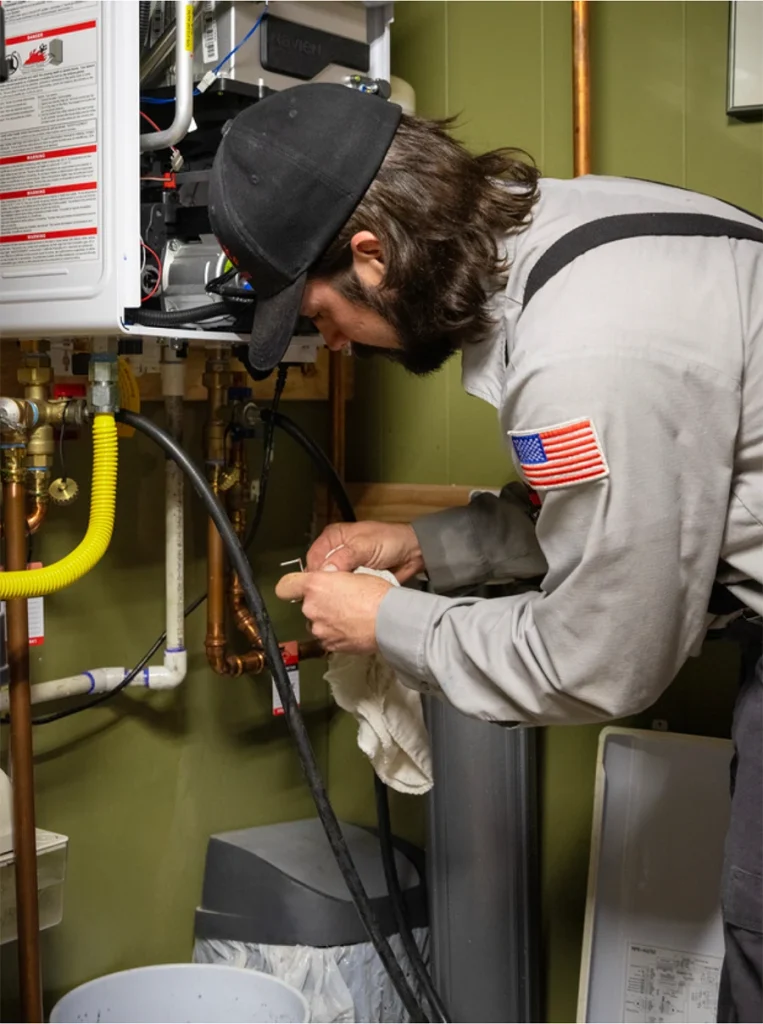
Choosing the Best Water Heater for Your Home
When it’s time to replace your water heater, you have more options than ever before. The right choice depends on your household size, energy source, budget, hot water usage habits, and even our unique Colorado mountain climate. Selecting the wrong system can lead to higher energy bills, inconsistent hot water, or premature equipment failure.
Below is a detailed comparison of the most common water heater types to help you determine which one is best for your home.
Electric Tank Water Heater
How it works: Uses electric heating elements to heat and store water in a tank, typically 40–80 gallons.
- Purchase Cost (unit only): $300 – $1,200
- Advantages: Lower upfront cost, simple installation, widely available, works well in homes without gas service
- Disadvantages: Higher operating costs in most areas, slower recovery time compared to gas models
Electric tank water heaters are reliable and affordable upfront. However, electricity rates can make them more expensive to operate long term. They are a practical option for smaller households or homes without natural gas access.
Gas Tank Water Heater
How it works: Burns natural gas or propane to heat and store water in a tank.
- Purchase Cost (unit only): $380 – $1,500
- Advantages: Lower operating cost than electric in most areas, faster recovery time, good for larger households
- Disadvantages: Requires gas line and proper venting, slightly higher upfront installation cost
Gas tank models remain one of the most common choices in Grand County homes. They provide dependable hot water and are often more economical to operate over time compared to electric tanks.
Tankless Gas Water Heater
How it works: Heats water on demand instead of storing it in a tank. When you turn on a hot water tap, burners ignite and heat water instantly.
- Purchase Cost (unit only): $1,000+
- Advantages: Endless hot water, energy-efficient operation, compact wall-mounted design, lower standby heat loss
- Disadvantages: Higher upfront cost, may require gas line upgrades, performance depends on proper sizing
Tankless systems are popular for homeowners who want unlimited hot water and improved efficiency. They work especially well for smaller to medium households. Proper sizing is critical, particularly in colder climates where incoming groundwater temperatures are lower.
Electric Heat Pump Water Heater (Hybrid Heat Pump)
How it works: Uses electricity to move heat from the surrounding air into the water rather than generating heat directly.
- Purchase Cost (unit only): $1,000+
- Advantages: 2–3 times more efficient than conventional electric tanks, significantly lower operating cost
- Disadvantages: Requires adequate space and warmer ambient air, performance may decrease in colder environments
Heat pump water heaters are extremely efficient, but they need sufficient room air temperature to operate effectively. In colder mountain climates or unheated mechanical rooms, performance can suffer unless properly installed in conditioned space.
Condensing Gas Water Heaters
How it works: Uses high-efficiency gas combustion and captures additional heat from exhaust gases to further heat the water.
- Purchase Cost (unit only): $1,000+
- Advantages: Lower operating cost, higher efficiency, ideal for homes with high hot water demand
- Disadvantages: Higher upfront investment
Condensing models are ideal for larger households or homes already using high-efficiency gas appliances. By extracting extra heat from exhaust gases, they can save $100 or more annually on energy bills compared to standard gas models.
Hybrid Tankless Water Heater
How it works: Combines a small storage tank with tankless heating technology to improve performance and reduce temperature fluctuations.
- Purchase Cost (unit only): $1,000+
- Advantages: Lower operating cost, reduced standby heat loss, eliminates the “cold water sandwich” effect common with some tankless systems
- Disadvantages: Higher upfront cost
Hybrid tankless systems offer a balance between traditional tank and on-demand systems, providing strong performance with improved efficiency.
Key Factors to Consider Before Choosing
- Household Size: More bathrooms and occupants require higher capacity or faster recovery rates.
- Fuel Source: Availability of natural gas or propane affects your options.
- Energy Efficiency Goals: Higher efficiency models reduce long-term operating costs.
- Installation Space: Tankless and heat pump models have specific space and venting requirements.
- Colorado Climate: Cold incoming water temperatures in mountain regions impact system sizing and performance.
Professional Sizing and Installation Matter
Improper sizing is one of the most common causes of hot water complaints. A system that’s too small will run constantly and fail prematurely. One that’s too large wastes energy. Proper venting, gas supply sizing, electrical capacity, and local code compliance are also critical for safe operation.
At Grand Lake Plumbing & Heating, we evaluate your household’s hot water demand, energy costs, and mechanical space before recommending the right solution. Whether you live in Grand Lake, Winter Park, Fraser, or Granby, we understand the unique needs of mountain homes.
Need Help Choosing the Right Water Heater?
If you’re considering a replacement or upgrade, call Grand Lake Plumbing & Heating at 970-627-3441. Our licensed technicians will walk you through your options and help you select the most efficient, reliable water heater for your home and budget.
With over 100 years of serving Grand County, we’re here to make sure you never run out of hot water.
