
How Well Does a Furnace Air Filter Clean the Air?
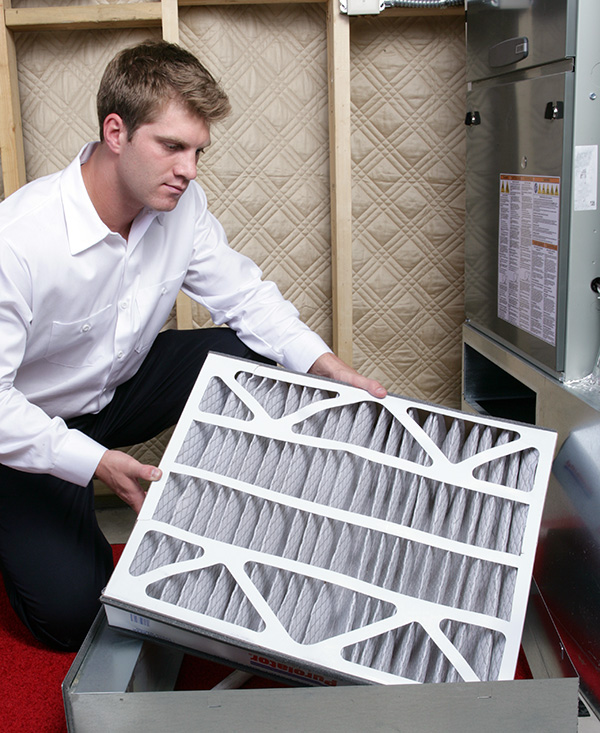
If you want to know how effective your furnace air filter is at removing contaminants from your home’s air, the first place to look is the filter’s MERV rating. MERV stands for Minimum Efficiency Reporting Value, and it’s the industry standard used to measure how well an air filter captures airborne particles. The scale was developed by the American Society of Heating, Refrigerating and Air-Conditioning Engineers, and the EPA publishes a plain-language explainer if you want the background.
In simple terms, the higher the MERV number, the smaller the particles the filter can trap. But choosing the “highest number possible” is not always the best solution for your HVAC system or your home.
What Does a Furnace Air Filter Actually Do?
Many homeowners assume their furnace filter’s main job is to clean the air they breathe. In reality, a standard furnace filter is primarily designed to protect your HVAC equipment. It keeps dust, debris, and particles from building up on sensitive components like the blower motor and heat exchanger.
That said, the filter does remove some airborne contaminants as air circulates through your system, including:
- Pollen
- Dust and dirt
- Pet dander
- Mold spores
- Dust mites
- Some bacteria and smoke particles (depending on rating)
The level of filtration depends on the MERV rating. For scale, a human hair is roughly 3 to 200 microns across, so the particles that matter most are well below anything you can see.
Understanding MERV Ratings
Filters are tested for their ability to trap particles of different sizes. Here’s a general breakdown of how various MERV ranges perform:
- MERV 1–4: Basic filtration. Captures larger particles like pollen, dust mites, and carpet fibers. Primarily protects equipment.
- MERV 5–8: Standard residential range. Removes mold spores, pet dander, and finer dust. Provides a good balance between air cleaning and system performance.
- MERV 9–12: High-efficiency residential filters. Traps finer particles such as lead dust, auto emissions particles, and many bacteria.
- MERV 13+: Captures very small particles including smoke, bacteria, and some virus-sized particles. Often used in hospitals or homes with specific health concerns.
FPR Ratings, or Why the Number on the Box Is Not Always MERV
Some retailers use a scale of their own. Home Depot filters carry an FPR number, short for Filter Performance Rating, which runs from roughly 300 to 1600 and measures how well the filter captures particles between 0.3 and 1.0 microns, the size most likely to be breathed in. A higher FPR means finer filtration, the same way a higher MERV does, but the two numbers are not interchangeable. If you are standing in the aisle holding a filter with only an FPR number on it and you are not sure what it means for your furnace, call us.
Should You Choose the Highest MERV Rating?
It may seem logical to install the highest MERV filter available in order to get the cleanest air possible. However, higher-rated filters have tighter pores, which makes it harder for air to pass through. If your HVAC system is not designed for high static pressure, this can:
- Reduce airflow throughout your home
- Make rooms feel less comfortable
- Increase energy usage
- Cause your blower motor to work harder
- Shorten the lifespan of your furnace or air conditioner
For most homes in Grand County, a MERV 5–8 filter provides effective filtration without restricting airflow. Some newer systems can safely handle MERV 11 or 13 filters, but this should be confirmed by a licensed HVAC professional.
Types of Furnace Filter, and How Much Each One Actually Removes
Fiberglass or cellulose pad. Cheap and disposable. It traps lint and larger dust but does little about anything smaller. This one protects the equipment rather than the air.
Washable or reusable. A metal or plastic mesh you rinse and put back. Cheaper over time, but it has to be cleaned monthly to work at all, and some need a tacky spray coating to catch finer particles.
Pleated polyester. More surface area, often with electrostatically charged fibers. It catches finer particles and usually lasts up to three months.
Deep-pleated high efficiency. Four to six inches thick and much better at small particles, but it needs a special filter housing, so it is not a straight swap for what you have.
Electronic air cleaner. Charges particles as the air passes through and collects them on plates. It removes far more than any disposable filter, but it needs cleaning monthly and costs more up front.
How much of the fine, sub-micron material each type actually removes:
| Filter type | Sub-micron particle removal |
|---|---|
| Fiberglass | Up to 2% |
| Washable or reusable | Up to 6% |
| Thin pleated | Up to 11% |
| Deep pleated | Up to 25% |
| Pleated electrostatic | Up to 49% |
| Electronic | Up to 94% |
How Often Should You Change Your Air Filter?
Filter replacement depends on several factors, including:
- Whether you have pets
- Allergies or asthma in the household
- Construction or remodeling nearby
- Wildfire smoke exposure
- How often your system runs
In general:
- Standard 1-inch filters should be checked monthly and replaced every 1–3 months.
- Homes with pets or allergy concerns may require more frequent changes.
- High-MERV filters may need replacement every 60–90 days to prevent airflow restriction.
In mountain climates like ours, where furnaces can run for extended periods during winter, staying on top of filter changes is especially important.
Changing the Filter: Four Things Worth Getting Right
Kill the power first. Turn the furnace off at the breaker panel or the disconnect, not just at the thermostat. Some furnaces run electrical wiring close to the filter location, and shutting the thermostat off does not cut that.
Never run the system with the wrong size filter. A filter that does not fit properly lets dust slip around the edges and straight into the house. It is also the main reason air conditioner coils clog, and clogged coils cost you efficiency and compressor life.
Treat the 90-day claim on expensive filters with suspicion. In our experience the high-restriction filters that promise ninety days should be changed monthly. Your furnace and air conditioner will move air more easily for it.
Buy by the case and keep them at the furnace. Six to twelve at a time usually costs less per filter, and having them within arm’s reach of the furnace removes the main reason people put the job off.
Pets change the arithmetic. Dander and hair are a leading source of household allergens and they clog a filter quickly, so plan on changing roughly twice as often if you have them. If you are not sure where the filter goes, which way round it fits, or what size you need, call us and we will talk you through it.
When Is a Whole-Home Air Filtration System a Better Option?
If you find yourself needing very high MERV filters or changing filters more than once a month, your home may benefit from a dedicated whole-house air filtration system.
Unlike a standard furnace filter, a whole-home air cleaner is specifically designed to improve indoor air quality. These systems can:
- Capture much smaller particles without restricting airflow
- Reduce allergens and airborne irritants
- Improve comfort for asthma and allergy sufferers
- Reduce household dust buildup
- Work alongside your heating and cooling system efficiently
Options may include high-efficiency media filters, electronic air cleaners, or UV air purification systems, depending on your needs.
Indoor Air Quality Matters in Colorado
In Grand County, we spend a significant amount of time indoors during the long winter season. Between tightly sealed homes, wood-burning fireplaces, pets, and seasonal wildfire smoke, indoor air quality can become a real concern.
Choosing the right filter, and making sure your HVAC system can handle it, is an important step toward maintaining a healthy, comfortable home.
Watch: Choosing a Furnace Filter
Have Questions About Air Filters?
If you’re unsure which MERV rating is right for your furnace, or you’d like to explore whole-home air filtration options, call Grand Lake Plumbing & Heating at 970-627-3441. Our licensed technicians can evaluate your system, recommend the proper filter, and help improve the air quality in your home.
We’ve been serving homeowners across Grand Lake, Winter Park, Fraser, and Granby for over 100 years, and we’re here to help you breathe easier all year long.
