
Many homeowners only think about their sewer line when there’s a major problem. When problems do occur, there are many questions to consider. Here are some of the most common questions we receive from homeowners about their sewer lines.
How long will my sewer line last?
How long a sewer will last depends on a number of factors including the pipe material, proximity to trees, and the age of the plumbing system. If your sewer line is more than 40 years old, it may need replacing. Even if the home was built more recently, its plumbing may be connected to an older sewer pipe. Whatever the age of your home, having routine sewer and drain line inspections can give you peace of mind knowing that the system is working correctly. If problems are found, it’s easier to fix the small problems before they become a major repair.
If the sewer line is damaged, who’s responsible for fixing it?
In most municipalities, homeowners are responsible for maintaining the sewer line from the home to the sewer main. In most cases the sewer main is located under the street in residential areas.
Does homeowner’s insurance cover sewer line damage and repair?
Most insurance policies do not cover repairs to sewer lines caused by age and wear and tear. We recommend checking your homeowner’s insurance policy to see if it covers sewer pipe repair or replacement. Some insurance companies will add a sewer and drain endorsement to your policy to cover losses related to a sewer line backup, and resulting damage to property.
What causes sewer line damage?
The most common problem with older homes built prior to 1980 is damage from tree roots that have invaded the joints of the pipes. Once a pipe develops a small leak from a crack or loose joint, trees will seek out the nutrients inside the pipe and grow into the gaps, eventually obstructing the pipe. Other causes include acts of nature such as erosion, human-caused damage from digging too close to the pipe, and age related deterioration.
How can I prevent damage to my sewer line?
Even if your home is newer, regular video sewer line inspections are good insurance. By inspecting the pipes for bulges, joint failures, cracks and tree root intrusion, you can prevent a costly sewer line backup and extensive repairs.
What are the warning signs of a sewer line problem?
Your home’s drain system is shaped like a tree, with branch pipes leading to a main trunk line that runs out to the sewer main. A clog in a branch stays in that branch: if the bathroom sink backs up while the toilet flushes normally, the problem is the sink drain. A clog in the main line behaves differently. The toilet may percolate, and waste water may come up through the shower, the tub or a basement floor drain. Slow drains and gurgling toilets are usually the first sign that the main line is obstructed, and they are worth a sewer line inspection straight away.
What should I keep out of the drains?
Cotton swabs, feminine hygiene products, paper towels and baby wipes all cause blockages, including the wipes sold as flushable. Paint, grease, oil and household chemicals belong nowhere near a drain. They harm the environment, and they build up inside the pipe.
Why do I smell sewer odor in my home?
Sewer gas reaching a room means a water trap somewhere has been bypassed. Work through these in order:
- Pour water down the floor drain. Without water in the trap, nothing blocks the gas.
- Lift the grate off the floor drain and check that the cleanout plug is sitting in the drain bowl. A missing plug lets sewer gas bypass the trap. Most hardware stores carry a replacement.
- Flush any toilet that has gone unused for a long stretch. The water in the trap evaporates.
- Check the toilet’s wax ring. The ring seals the toilet flange to the base, and a leaking ring lets gas escape from underneath. Replacing it means pulling the toilet. If the toilet rocks on its base, shim it so the new ring does not break.
- If none of those is the cause, the line itself may be cracked or broken, or a joint inside a wall may be loose. That is the point to call a plumber.
My sewer line is damaged, what are my options?
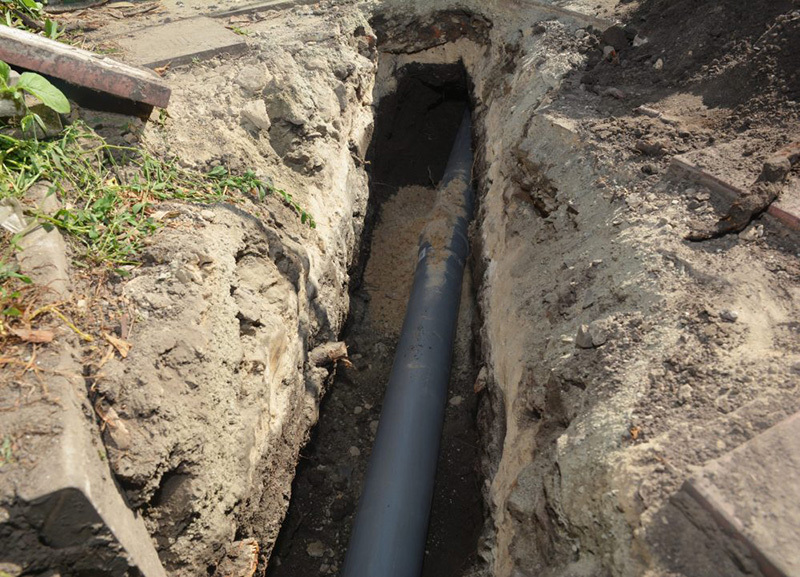
In the past, your only option was to dig a trench in the yard to access to the damaged section of the pipe. With today’s new trenchless sewer line repair technology, we can often repair a damaged sewer line from inside the line itself. After clearing the obscructed section of pipe we can reline the inside of the pipe from the inside to repair the damage.
Have questions about home sewer lines? Call Grand Lake Plumbing and Heating. We can help answer all your questions. For clogs and slow drains, see our drain cleaning service.
