
Recent Project: Whole House Well Water Treatment in Kremmling, CO
 Grand Lake Plumbing & Heating recently completed a whole house well water treatment system replacement for a property in the Kremmling area. The existing treatment equipment was not capable of handling what the private well was producing. Water testing showed extremely high bacterial counts, corrosive water chemistry, visible discoloration, and conditions that were already beginning to affect the home’s plumbing.
This was not a simple filter replacement. The home needed a complete water treatment system designed around the actual well water test results, the size of the property, and the long-term need to protect the plumbing system from corrosion.
Project Facts
- Location: Kremmling, Colorado
- Project Type: Whole house well water treatment system replacement
- Primary Concern: Bacteria, corrosive water chemistry, sediment, sulfide, and plumbing protection
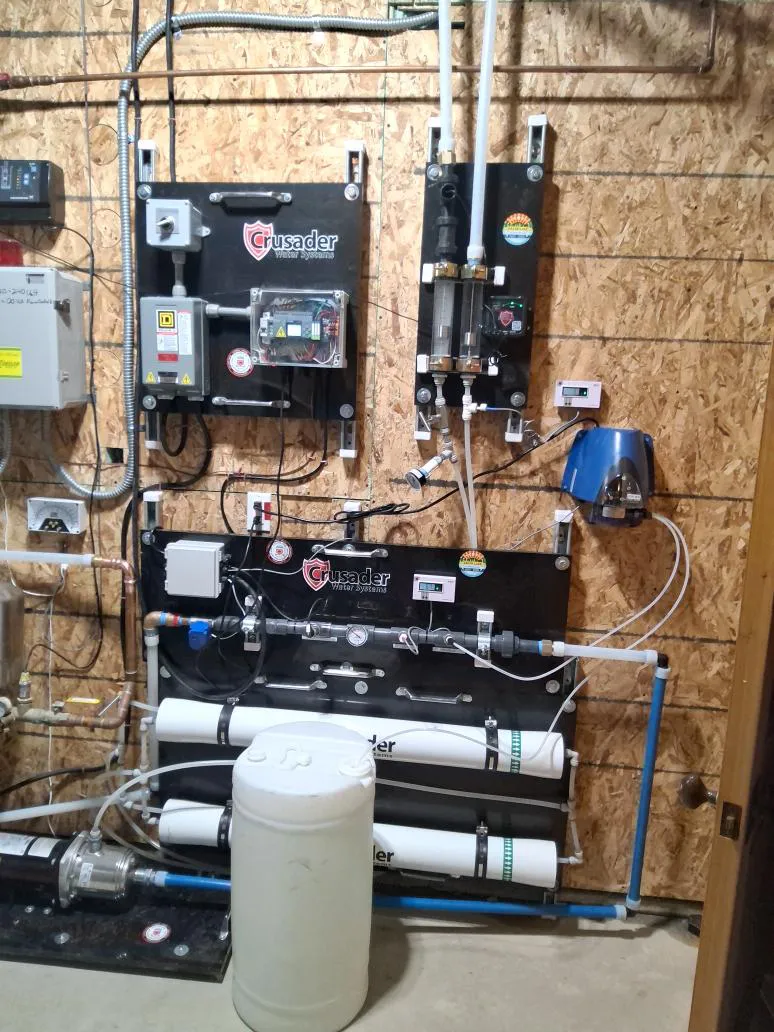
- Equipment Installed: Crusader CS-RO-M-4000 commercial reverse osmosis system, Crusader UV treatment, Pulsafeeder peristaltic injection pumps, D.A.B. Esybox booster pump, Crusader remineralization filter, and Crusader CS-AA-300T scale and corrosion inhibitor
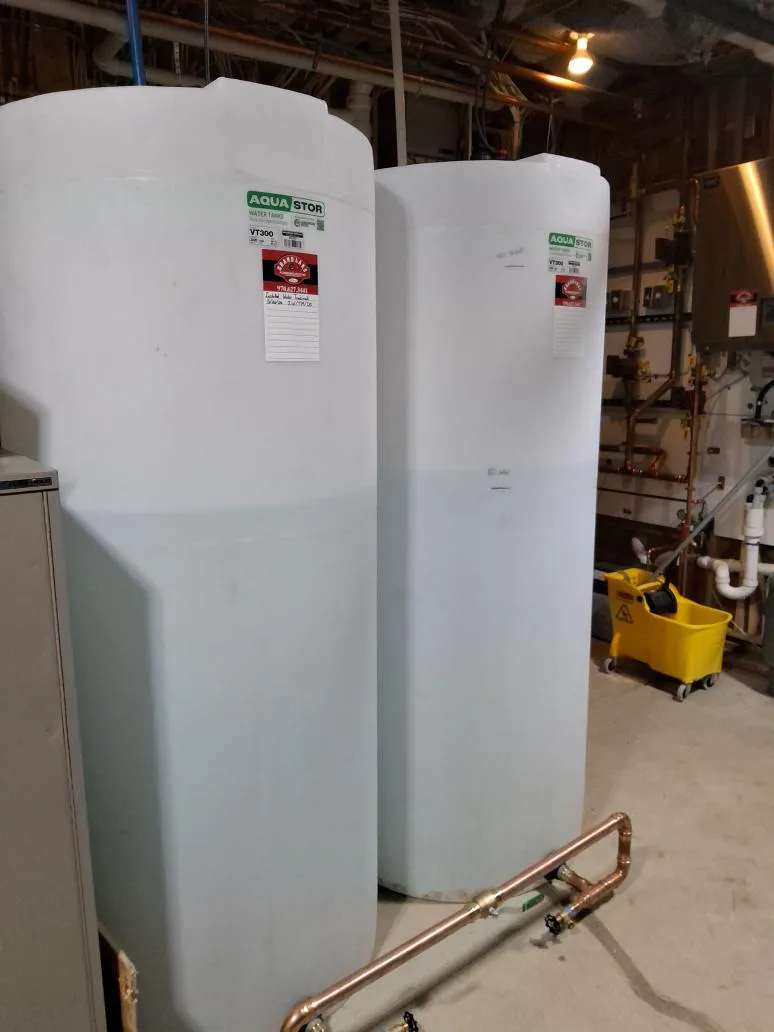
- Storage Capacity: Two 300-gallon storage tanks for 600 gallons of treated water reserve
- Result: Purified, remineralized water with consistent pressure and a treatment system matched to what the well produces
The Challenge
 A water quality inspection in early 2026 revealed a private well that was safe to drink but highly destructive to the home’s plumbing system. The problem was not only what was in the water. It was what the water itself was doing to the house.
Iron reducing bacteria registered at 35,000 colony-forming units per milliliter, compared with an acceptable threshold of fewer than 8. Slime forming bacteria came in at 200,000 colony-forming units per milliliter, which was 10,000 times the acceptable level. Sulfate reducing bacteria measured at 4,500 colony-forming units per milliliter, compared with an acceptable level of fewer than 20. Total coliform bacteria was also present when it should have been absent entirely.
The water chemistry showed additional concerns. The Puckorius Scaling Index and Ryznar Stability Index were both in the intolerable corrosion range. The Chloride Sulfate Mass Ratio was four times the threshold associated with high galvanic corrosion, indicating that the water was actively attacking copper fittings and pipe joints.
The homeowner could already see the effects. The raw water had an orange color, and leaking bathroom fixtures suggested the corrosive process had been underway for some time.
The home had an existing whole house filter, but the equipment was not designed for bacterial loads or corrosive chemistry at this level. It may have provided a sense of protection, but it was not close to adequate for what the well was actually producing.
The Solution: A Complete Well Water Treatment System Replacement
Grand Lake Plumbing & Heating removed the existing treatment setup, cleared the mechanical room, and installed a new system designed in stages. Each stage was chosen in response to the water test results.
Stage One: Oxidation and Disinfection
Two Pulsafeeder peristaltic injection pumps introduce 34% hydrogen peroxide into the incoming well water supply. This oxidizes dissolved iron, helps address iron reducing and sulfate reducing bacteria, and converts sulfide so it can be removed downstream.
A contact reaction holding tank gives the chemistry time to work before the water moves through the rest of the system. A Crusader CS-MM-OX-10 multimedia oxidation filter then captures precipitated contaminants and uses a self-backwashing cycle to keep the media clean.
Stage Two: Clarification and Sediment Removal
After oxidation, a Crusader multimedia self-backwashing clarifier filter captures mid-size particulate matter. A high-capacity sediment filtration unit with 10/5 micron filters follows to remove finer sediment before the water reaches the reverse osmosis membranes.
This step is especially important because fine sediment can foul reverse osmosis membranes and reduce system performance over time.
Stage Three: Reverse Osmosis Purification
The Crusader CS-RO-M-4000 reverse osmosis system provides commercial-grade treatment capacity with a peak production rate of 4,000 gallons per day. A Pulsafeeder injection pump doses anti-scalant chemical to help protect the membranes from fouling.
During commissioning, the system tested with an incoming total dissolved solids level of 65 and a tank total dissolved solids level between 0 and 5, confirming that the membranes were performing as intended.
Two 300-gallon storage tanks receive the purified water, giving the home 600 gallons of treated water reserve. This allows the system to meet household demand without relying on real-time reverse osmosis production alone.
Stage Four: Remineralization and Corrosion Protection
Reverse osmosis water is highly purified, but it is also demineralized. Demineralized water can be corrosive and is not ideal for drinking or plumbing protection without additional treatment.
A Crusader remineralization filter adds healthy minerals back into the water and helps balance pH before the water enters the home’s plumbing. A Crusader CS-AA-300T Active Armor scale and corrosion inhibitor provides additional protection against the galvanic corrosion risk identified in the water chemistry report.
Stage Five: UV Protection and Whole House Distribution
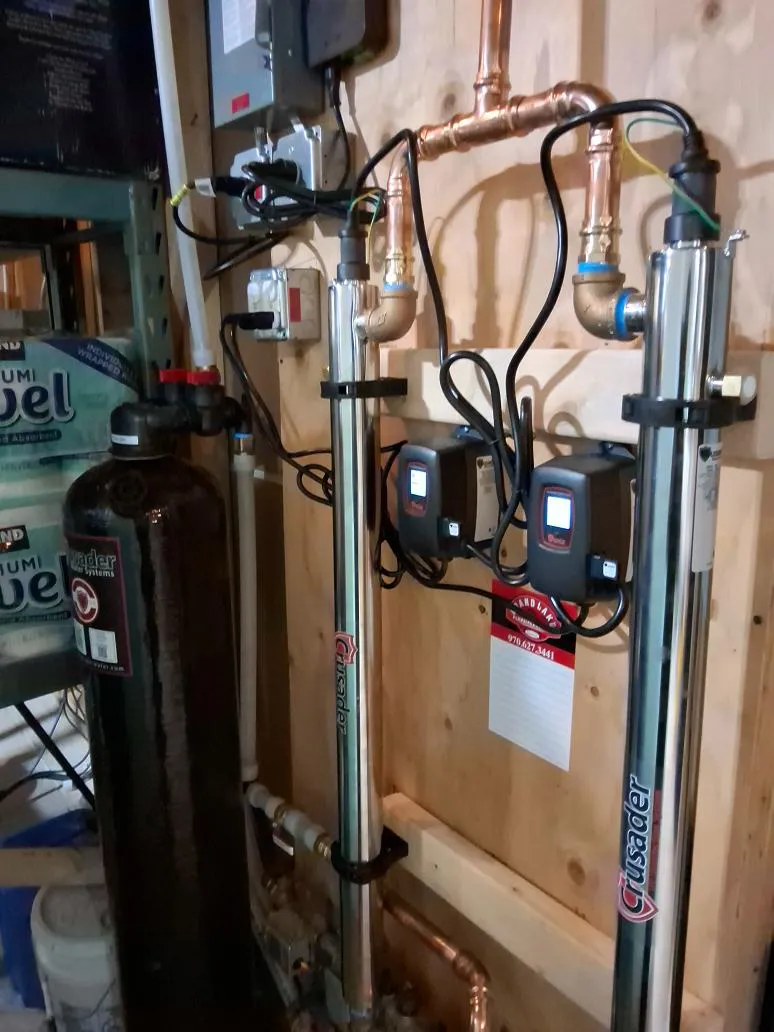 Two Crusader ultraviolet treatment units were installed as a final line of protection against bacterial growth. The UV systems include digital countdown maintenance timers, which are especially useful for properties that may sit unoccupied for stretches of time.
A D.A.B. Esybox variable-speed whole house booster pump provides consistent water pressure throughout the home. A high water alarm monitors the storage tanks, and four test ports were installed at key points in the system so future water testing can identify where any change is occurring.
The Results
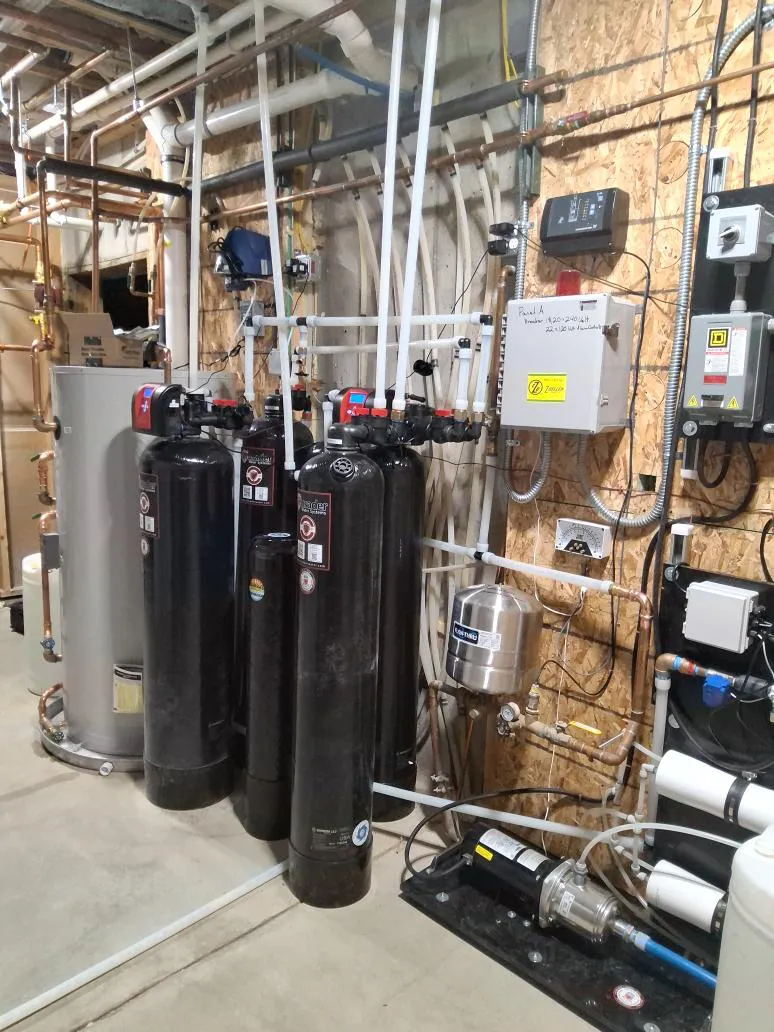 The home now has a whole house treatment system matched to what the private well actually produces. Water that arrived orange and carried bacterial counts thousands of times over acceptable levels now exits the treatment system purified, remineralized, and ready for daily use.
The 600-gallon storage reserve gives the property a buffer that the previous setup did not provide. The high water alarm adds protection, and the test port configuration gives the Grand Lake Plumbing & Heating team a clear way to evaluate future water quality at each stage of treatment.
Most importantly, the new system helps protect the home’s plumbing from the corrosive chemistry that had already begun showing up in leaking fixtures.
Well Water Treatment in Kremmling and Grand County
Private wells in Grand County can produce a wide range of water quality problems, including hard water, sediment, bacteria, sulfur odor, corrosion, discoloration, pressure issues, and mineral-heavy water. The right solution starts with testing and a system designed around what the well is actually producing.
Grand Lake Plumbing & Heating provides water treatment services and well water system service throughout Grand County, including Kremmling, Granby, Grand Lake, Hot Sulphur Springs, Fraser, Winter Park, and surrounding areas.
If a water quality test has raised concerns, or if you have never had your well water tested, the GLPH team can help evaluate your water and recommend a treatment system built around your home.
Call Grand Lake Plumbing & Heating at 970-627-3441 to discuss whole house well water treatment options.
Whole House Well Water Treatment FAQs
Why does well water need to be tested before choosing treatment equipment?
Well water treatment should be based on what the well actually produces. Testing can identify bacteria, minerals, sediment, corrosion risk, pH issues, sulfur, iron, and other conditions that determine what type of system is needed.
Can an existing whole house filter be undersized for a private well?
Yes. A basic or undersized filter may not be capable of addressing high bacterial loads, corrosive chemistry, sulfur, sediment, or dissolved contaminants. A system that looks like it is treating the water may still be inadequate for the actual conditions.
Why use reverse osmosis for a whole house water treatment system?
Reverse osmosis can remove dissolved contaminants that other filtration stages may not address. In this project, a commercial-grade reverse osmosis system was selected because the property’s water chemistry and demand required a higher-capacity solution.
Why is remineralization needed after reverse osmosis?
Reverse osmosis water is highly purified, but it is also demineralized. Remineralization helps balance the water before it enters the home, making it more suitable for drinking and helping reduce corrosion risk.
