
Well Water Treatment in Kremmling: Eliminating Methane from a Private Well
Grand Lake Plumbing & Heating recently completed a whole house well water treatment installation at a 1987 log cabin in Kremmling, Colorado. The private well had a serious and unusual problem: methane in the water supply at a level that created a flammability hazard at the home’s fixtures.
The water issue was not limited to taste, odor, or staining. The methane hazard, combined with additional contaminants that made the water unsafe for consumption, required a full replacement of the old treatment equipment and a new system designed around the actual well conditions.
Project Facts
- Location: Kremmling, Colorado
- Project Type: Whole house well water treatment installation
- Property: 1987 log cabin served by a private well
- Primary Concern: Active methane in the well water supply creating a flammability hazard at fixtures
- Equipment Installed: Methane aeration system with explosion-proof exhaust venting, oxidation, sediment filtration, reverse osmosis, remineralization, Active Armour, UV disinfection, dual 100-gallon cistern tanks, and a DAB variable-speed pump
- Storage Capacity: Two 100-gallon cistern tanks for 200 gallons of treated water reserve
- Result: Methane removed at the source, treated water available on demand, consistent 60 PSI pressure, and documented system performance
The Challenge
At this Kremmling cabin, the warning sign was dramatic: the water could be lit on fire.
Methane can occur naturally in groundwater in parts of Grand County. When methane-saturated water flows through faucets, showers, and appliances, it releases dissolved gas into the air. In enclosed areas, that gas can accumulate and create an ignition risk.
In this home, the water supply itself was the source of flammable gas. That made every fixture connected to the well water system a potential accumulation point. This was not a nuisance water issue. It was a safety problem.
The well water also carried additional contaminants that made it unsafe for drinking and daily use. The existing treatment equipment was aging, located in a crawl space, and had no documented service history. It was not capable of addressing the methane hazard or the broader water quality concerns.
The property also sits unoccupied for stretches of time, like many cabins and second homes in Grand County. When untreated or undertreated water sits stagnant, bacterial growth can become a larger concern. When the home is occupied again, that accumulated biological risk can come out of every tap.
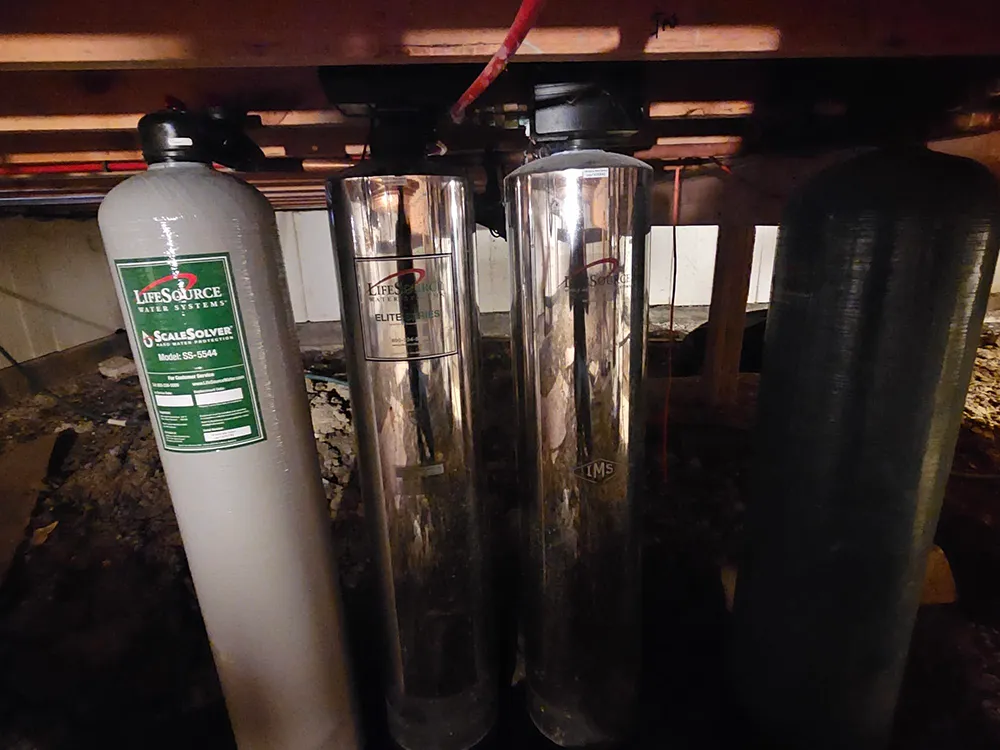
The original treatment equipment prior to removal. Aging components with no documented service history left no reliable baseline for water quality.
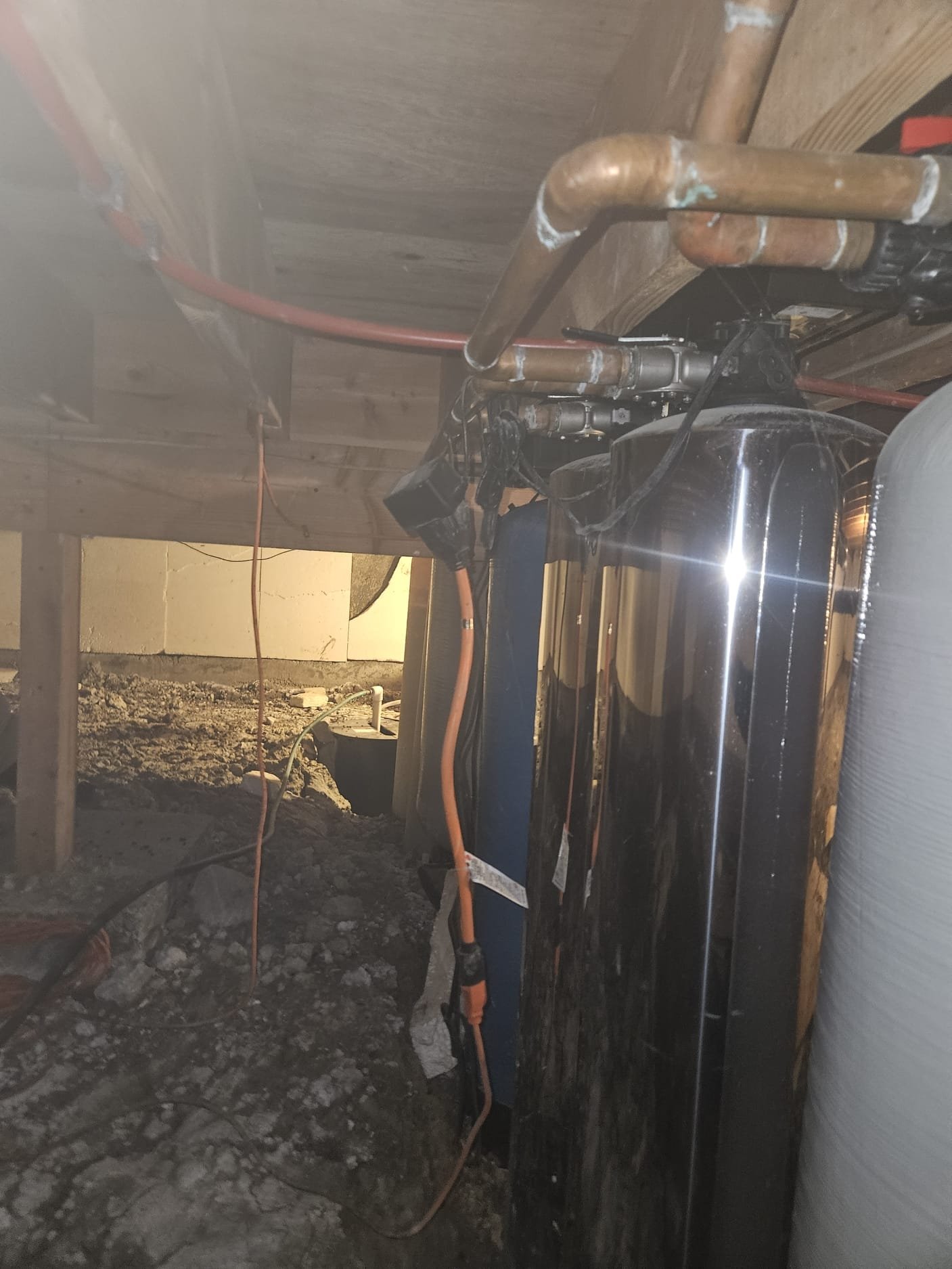
The previous system was installed in the crawl space, making routine service and inspection difficult.
Demonstration of methane concentration in the well water supply before treatment installation. Active methane at this level creates an ignition hazard at residential fixtures.
The Solution: Methane Removal and Multi-Stage Water Treatment
The Grand Lake Plumbing & Heating team designed the new system around one clear principle: no single point of failure. Each stage of treatment supports the stages around it, and the overall system is built to continue protecting water quality even when one component is being serviced.
Methane Aeration with Explosion-Proof Venting
The first and most urgent issue was methane. GLPH installed an active aeration system at the point of entry. Aeration strips dissolved methane from the water under controlled conditions before the water reaches fixtures in the home.
The released gas is carried out of the structure through explosion-proof exhaust venting. That specification matters because standard exhaust fans are not rated for flammable gas environments. In a home with methane in the water supply, explosion-proof venting is the correct safety measure.
Oxidation, Filtration, and Reverse Osmosis
After aeration, the water moves through a staged treatment sequence. Oxidation addresses dissolved minerals and metals that aeration alone cannot capture. Sediment filtration removes particulate matter before the water reaches the reverse osmosis stage.
Reverse osmosis removes remaining dissolved contaminants, producing highly purified water. Because reverse osmosis water is demineralized, a remineralization stage then restores beneficial minerals, helps balance pH, and makes the water more suitable for drinking and daily household use.
Scale and Corrosion Protection
Active Armour protection was integrated into the system to help address scale and corrosion. This helps protect the home’s plumbing and fixtures from future buildup while gradually addressing deposits that may already exist inside the piping.
UV Disinfection for a Home That Sits Vacant
A UV disinfection unit provides a final biological treatment step before water enters the home’s distribution system. The UV system was selected with a digital countdown timer, which is especially useful for a property that is not occupied year-round.
When the home sits empty, the timer tracks elapsed time and helps identify when the UV system needs attention to address bacterial accumulation in standing water.
Storage and Consistent Water Pressure
Two 100-gallon cistern tanks provide 200 gallons of treated water reserve. This allows treated water to remain available on demand without forcing the reverse osmosis membrane to keep up with peak household use in real time.
The old surface jet pump and pressure tank were replaced with a DAB variable-speed pump that delivers steady 60 PSI throughout the home. A variable-speed pump adjusts output to match demand, helping provide more stable pressure than conventional fixed-speed equipment.
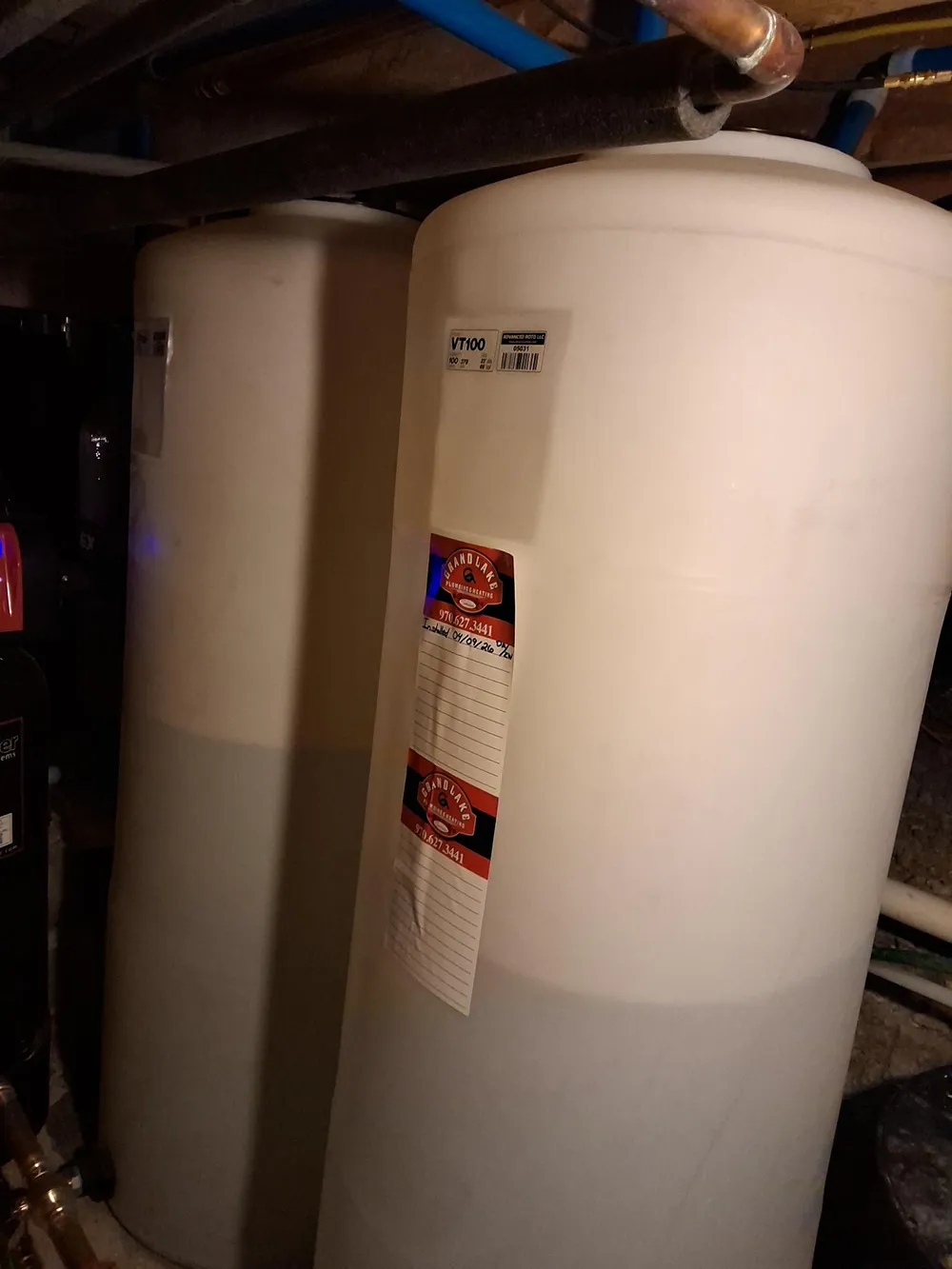
The two 100-gallon cistern tanks provide 200 gallons of treated water storage.
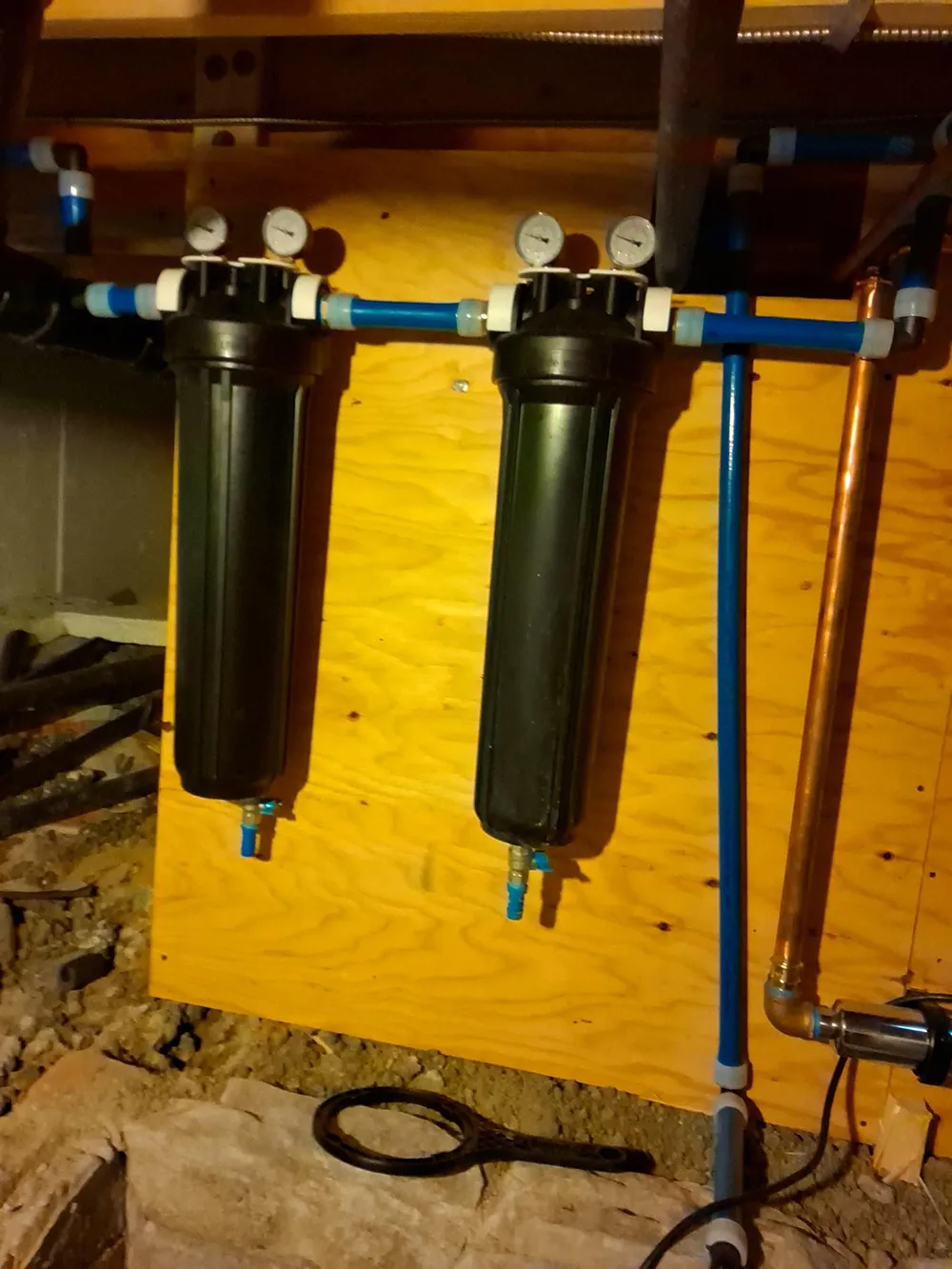
The completed multi-stage filtration assembly includes oxidation, sediment filtration, reverse osmosis, remineralization, Active Armour, and UV disinfection.
Documented Testing and Serviceability
Four test ports were installed at key intervals throughout the treatment sequence. Combined with post-installation water testing, these ports give the homeowner and future service technicians a clear way to verify system performance.
This documentation establishes a baseline that the old system never provided. Future water tests can now be compared against known conditions instead of treating the system like a black box.
The Results
Every fixture in the home now delivers purified, remineralized, pH-balanced water that is safe for drinking and daily use. The methane hazard has been eliminated at the source, and the home now has 200 gallons of treated water in storage.
The new pump provides consistent 60 PSI pressure throughout the home. The UV system helps protect water quality during periods when the cabin sits vacant. The homeowner also now has a documented baseline, a clear maintenance schedule, known service intervals, and a system designed for the way the property is actually used.
Well Water Treatment for Kremmling and Grand County Homes
Private well water in Grand County can create problems that go far beyond taste and odor. Methane, bacteria, sediment, minerals, corrosion, pressure issues, and stagnant water in seasonal homes can all affect safety, comfort, and long-term plumbing performance.
Grand Lake Plumbing & Heating provides water treatment services and well water system service throughout Grand County, including Kremmling, Grand Lake, Granby, Hot Sulphur Springs, Fraser, Winter Park, and surrounding areas.
If your home draws from a private well, and especially if you notice changes in water quality, smell, pressure, or fixture performance, a proper water quality assessment is the right place to start.
Call Grand Lake Plumbing & Heating at 970-627-3441 to discuss well water treatment options in Kremmling or anywhere in Grand County.
Methane and Well Water Treatment FAQs
Can methane in well water be dangerous?
Yes. Methane dissolved in well water can be released into the air when water flows through fixtures. If the gas accumulates in an enclosed space, it can create an ignition risk.
How is methane removed from private well water?
Methane is commonly addressed with aeration. The system strips dissolved methane from the water under controlled conditions, then vents the gas safely out of the structure.
Why was explosion-proof venting used on this project?
Explosion-proof venting was used because the system was exhausting flammable gas. Standard exhaust fans are not rated for that type of environment.
Why does a whole house reverse osmosis system need water storage?
Reverse osmosis systems produce treated water at a controlled rate. Storage tanks allow the home to have treated water available during peak demand without relying on real-time RO production alone.
Does Grand Lake Plumbing & Heating treat methane in well water?
Yes. Grand Lake Plumbing & Heating can evaluate private well water concerns and design treatment systems for methane, bacteria, sediment, minerals, corrosion, pressure issues, and other water quality problems found in Grand County homes.
